
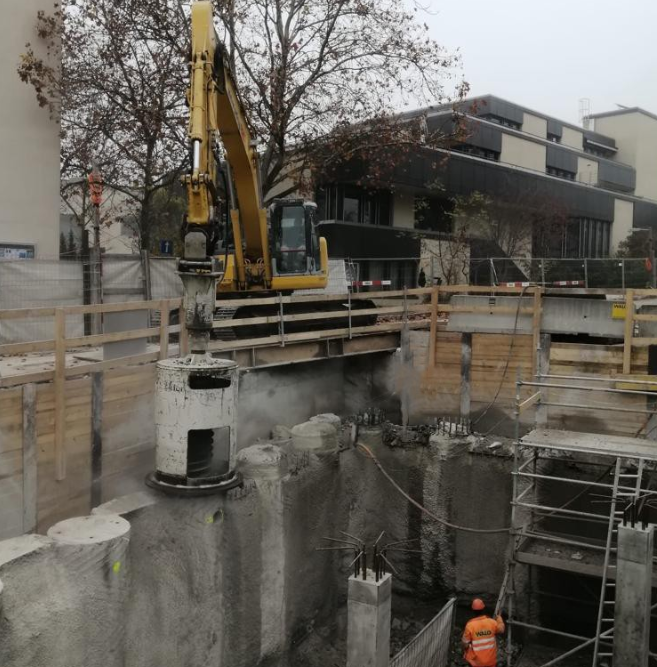
Engineers often lean on a contiguous bored pile wall when they need a reliable way to support earth during deep basement construction. You basically drill a series of vertical holes in the ground and fill them with concrete to form a barrier. It is not necessarily watertight because the piles sit side-by-side without overlapping like secant walls do. Still, it works well in stable soil where you just need to prevent the dirt from sliding into your work zone while digging.
Managing the installation phase
You really need to keep the drilling rig perfectly vertical to make sure your contiguous bored pile wall stays aligned throughout the process. If the drill tilts even a little bit, it leaves gaps at the bottom that might cause problems with soil stability later on. Teams usually work in a calculated sequence to minimise movement while the concrete is still wet and settling. Keeping things organised helps the whole project move ahead without those annoying, time-consuming corrections that usually ruin your weekly schedule.
Handling the steel cages
Dropping the reinforcement cages into those deep holes is a super tense part of the job that requires lots of focus. You have to ensure that every contiguous bored pile wall component is positioned correctly so the steel does not hit the dirt walls. It is smart to use little spacers on the cages to keep them centred and fully covered by the concrete mix. Good cover prevents rust from creeping in, which keeps your foundation strong for many years after the build is finished.
Why do urban sites benefit
City projects are always tight on space, so using a contiguous bored pile wall is a huge win for site managers. You don’t need to excavate wide, sloping pits that eat up all your usable construction area. This compact design fits nicely right up against property lines or existing buildings without disturbing the neighbours too much. It is a very practical way to maximise the footprint of your land while keeping the excavation area safe for all the workers down inside the pit.
Adding the top beam
Once all the concrete has hardened, the crew pours a horizontal beam across the top to tie the individual elements into one structure. This cap beam connects your entire contiguous bored pile wall, so it acts like one giant, stiff unit against the outside pressure. It also creates a solid, level edge that helps with the next construction steps, like building basement floors. Don’t skip this part because it is really what makes the whole system rigid enough to hold up the heavy ground loads.
Planning for site drainage
Since this type of wall is not perfectly sealed, you might get some water seepage if your site has a high water table. A contiguous bored pile wall needs a good drainage plan behind it to handle any moisture that finds its way through those small gaps. Your site engineer should figure this out early so you can install pumps or pipes before things get too messy. Being proactive with your water management is just common sense for anyone trying to maintain a dry, efficient workspace.
Conclusion
Picking the right earth retention system is a major choice that really impacts the safety and total cost of your foundation. You can find detailed technical resources about these systems at Brextor.com to help your team make informed decisions during the planning phase. Evaluating your exact land construction and local building codes ahead of time is a smart way to avoid high-priced surprises for a while.